
Automotive Head-Up Displays: Analyzing the Competitive Landscape and Market Share
The automotive head-up display market is rapidly evolving, driven by technological advancements and increasing consumer demand for enhanced safety and in-car experiences. As a result, the market is becoming increasingly competitive, with both established automotive suppliers and new technology firms entering the space. In this article, we’ll analyze the competitive landscape of the automotive head-up display market and explore the market share distribution among key players.
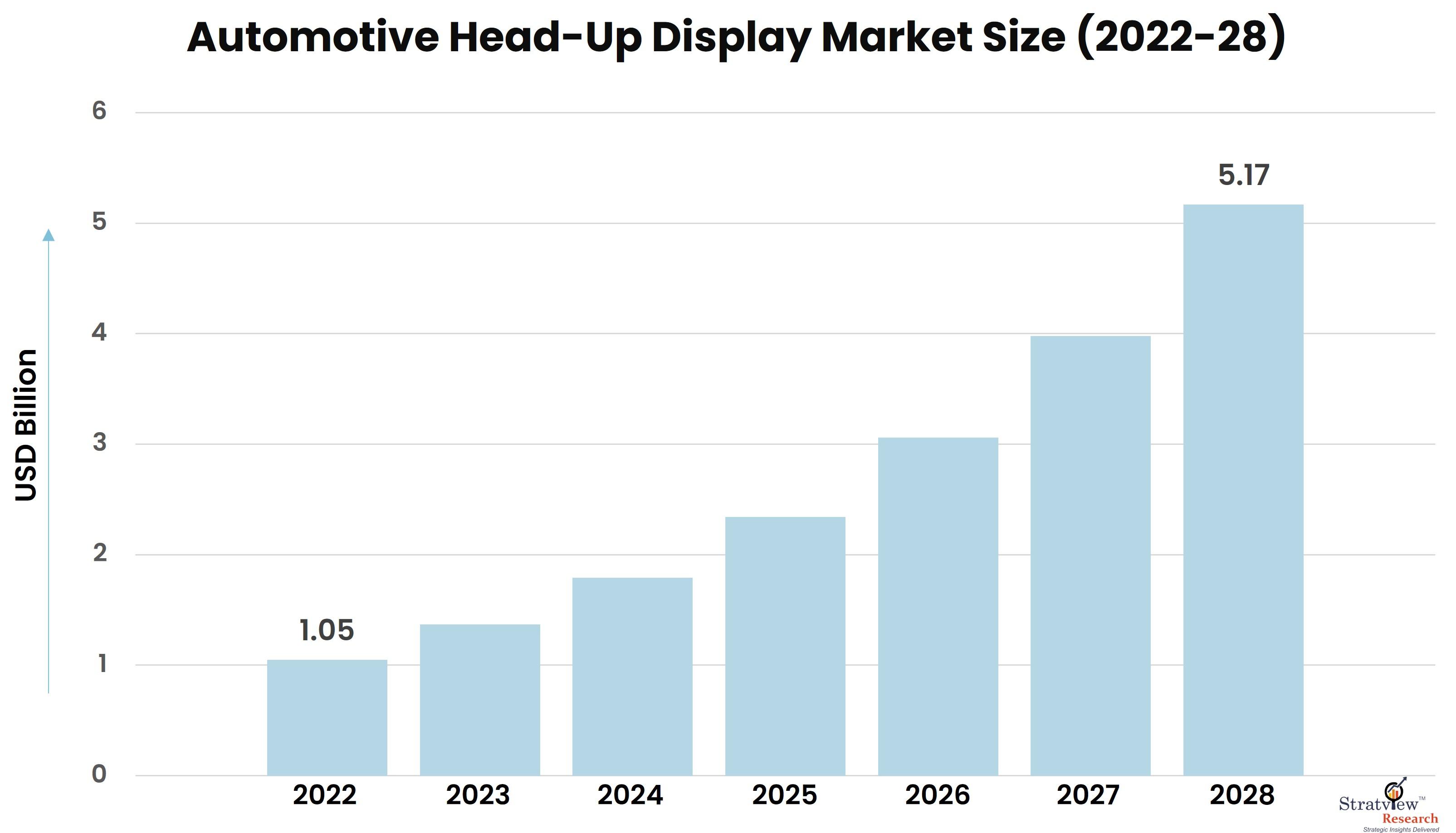
According to Stratview Research, the automotive head-up display market was estimated at USD 1.05 billion in 2022 and is likely to grow at a CAGR of 30.42% during 2023-2028 to reach USD 5.17 billion in 2028.
Key Players and Market Share
The automotive head-up display market is dominated by a few large players who have established strong footholds by leveraging their expertise in display technologies and automotive systems. Leading companies include:
- Visteon Corporation: A key player in the automotive display industry, Visteon offers advanced head-up display solutions with AR capabilities, serving top-tier automakers globally. Visteon’s strong presence in both the luxury and mainstream vehicle segments makes it one of the market leaders.
- Continental AG: Another giant in automotive electronics, Continental provides head-up display systems that focus on improving driver safety and convenience. Their head-up display systems are known for integrating seamlessly with advanced driver assistance systems (ADAS).
- DENSO Corporation: DENSO’s head-up displays are integrated with its broader automotive technology solutions. The company has seen significant growth in the head-up display market, especially with its focus on safety-enhancing features.
- Nissan Motor Co., Ltd.: While not just a supplier, Nissan has also been developing in-house head-up display systems, particularly for its electric and autonomous vehicles. Nissan’s collaboration with tech firms helps it remain competitive.
These companies collectively hold a significant portion of the global automotive head-up display market, but there are several emerging players, particularly in the augmented reality (AR) head-up display space, that are working to capture market share.
Competitive Dynamics and Trends
The competitive dynamics of the head-up display market are being driven by three main factors:
- Technological Innovation: The push for more advanced and immersive head-up display systems, particularly those integrating AR and 3D imaging, is fueling innovation. Companies that can deliver cutting-edge technology will have a competitive advantage in attracting OEMs and Tier 1 suppliers.
- Integration with ADAS: As ADAS becomes standard in vehicles, automakers seek head-up display solutions that integrate seamlessly with these systems. Companies offering HUDs that provide real-time safety alerts, navigation, and other driving assistance features are gaining favor.
- Cost Reduction: While premium and luxury carmakers have driven demand for high-end head-up displays, mass-market players are working to reduce costs and make head-up displays accessible to a broader audience. This trend is creating a more competitive market as automakers seek cost-effective solutions.
Opportunities for Growth
The automotive head-up display market is poised for growth, especially in regions such as North America, Europe, and Asia-Pacific. As the automotive industry shifts toward electric vehicles and autonomous driving technologies, demand for head-up display systems is expected to rise, creating significant opportunities for both existing players and new entrants. Additionally, with increasing consumer preference for enhanced in-car experiences, companies that can combine innovation with affordability will likely capture a larger share of the market.
Conclusion
The competitive landscape of the automotive head-up display market is dynamic, with strong players leading the way in technological innovation, safety integration, and cost-effectiveness. As the market continues to evolve, companies that can balance advanced technology with accessibility will be well-positioned to secure their place in this growing industry. The future of automotive head-up display is bright, with ongoing advancements in AR, safety systems, and integration with autonomous vehicles driving further growth and competition.

 English
 Arabic
 French
 Portuguese
 Deutsch
 Turkish
 Dutch
Dutch
 Italiano
 Russian
 Romaian
 Portuguese (Brazil)
 Greek
Greek